
Frequently asked questions
FAQs
For Engineers
Q. If you design each site differently, how can I provide a detail that is correct for my site?
A. We provide the detail drawing for your plans with all information, inverts, etc., exactly matching your site and pipe chart. We send it to you as an electronic DWG file and as a PDF file.
Q. Besides the obvious pipe and flow data, what will I need to send to you?
A. We need to see a plan view of the entire site (A PDF file is best), and the area where we are proposed to be located. We need topography and the type of surface finish in our install area. Finally, we need the jurisdiction of the job so we can coordinate with the local authorities. Please visit our DOWNLOADS to get a “Design Information Sheet”, or complete our online form to get a stormwater treatment design specific to your area.
Q. How do you handle revisions?
A. We do not charge for our original design or any revisions. From the initial submission at the local jurisdiction to the final set of permitted construction drawings, revisions are a way of life. Once we have your project in system, the turnaround on revisions is very short and usually is made the same day.
General Questions
Find quick and helpful answers to the most common questions about our services, products, and support solutions.
Q. I can't find a list of models, capacities and cost. Do you have one?
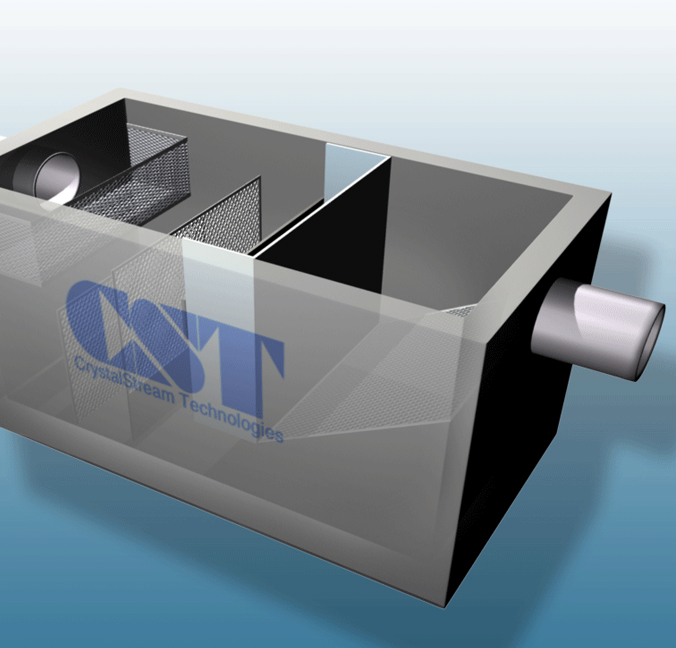
A. We design each stormwater treatment system on a site-by-site basis. We do attempt to use standard concrete form sizes for our units to lower the cost but the internal configuration is based on the flow directed to the unit; the types of pollution expected to be encountered; and the desired performance. If we are given engineering drawings, we can provide a budget price to within five percent, usually within an hour.
Q. How big of an area can your device handle?
A. Our stormwater treatment units are based on flow.
Q. How much do the units cost?
A. Aluminum and concrete costs can vary. The base cost today is from about $11,000.00 for the smallest capacity device (6 cfs) to about $50,000.00 for the largest capacity device (36 cfs). This cost is for the vault itself. Depending on the depth of the inflow pipe the riser cost will vary by height but is usually less than $5,000.00
Q. What does installation cost?
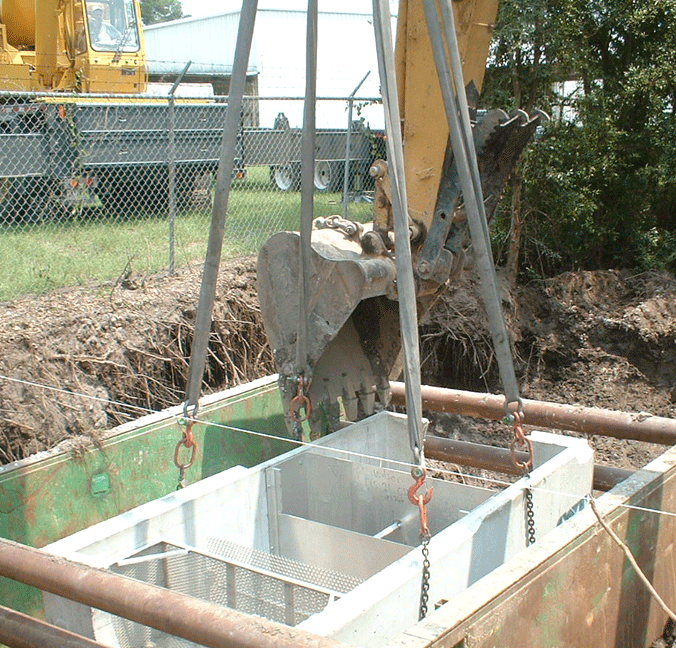
A. Installation costs vary from region to region, however typical installation costs are similar to those of a water meter pit of equivalent size. Typical pricing from our precast partners includes all freight, delivery and assembly charges but does not include installation. Normally the site contractor will excavate the hole, level the bottom, and set the unit. The contractor finishes the job by mudding out the pipes and back-filling around the unit. Our devices are delivered ready to operate and fully functional.
Q. What are your pollution removal rates and how do you meet local specifications?
A. Every flow-based device has a variable performance curve. In general, the slower the stormwater treatment deviceflows, the more efficient it is in removing materials including suspended sediments. In concert with the design engineer, we determine the local standards. Then we propose operational flows for our device based on our design calculations, that meet those standards. We provide the site engineer with a design report and a detailed drawing to accompany their plans, detailing exactly how the stormwater treatment system we propose will satisfy the local rules and regulations. CrystalStream Technologies has independent third-party field testing that confirms our performance.
Q. During construction, who will clean out this unit as it fills with silt and debris?
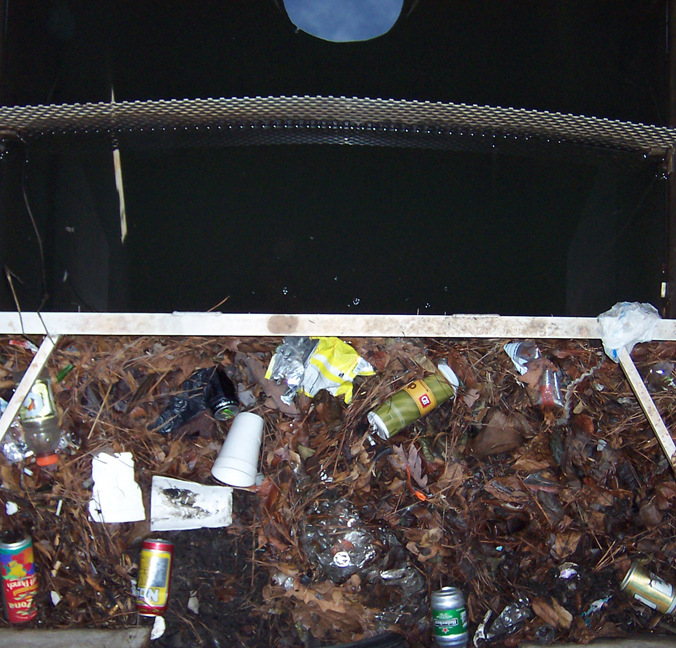
A. The site contractor is responsible for the cleaning until the site is turned over to the owner. That is the bad news. The good news is that the stormwater treatment device will prevent almost all sediments or other pollutants from leaving the site and will help protect the site contractor from violations. There is also a spill protection feature that will help protect the contractor from accidental fuel spills or other hydrocarbon spills. Also, it is much easier to clean this unit than to clean the materials out of a dirty pond or forebay.
Municipalities
Q. How do we know that your device will perform as advertised?
A. We will follow your design standards, your specifications, and your local rules. Before any stormwater treatment device goes into your jurisdiction, we will show you exactly how we design our units, and let you determine how well they meet your standards. Every proposal you see from us from then on will follow the guidelines you have set for us. Each stormwater treatment unit will be designed for the individual site submitted, and we will provide you with drawings and calculations specific to that site. If, at any time, you are not satisfied with our plans, we will change to meet your wishes, or we will withdraw the proposal. CrystalStream Technologies has independent third party testing that confirms our performance. Please call for details.
Q. We have 303d listed, impacted streams. How do you address specific pollutants?
A. Our site-specific design revolves around flow data, but it is much more. We look upstream in the area tributary to the site in question to see what likely pollutants will be coming to our stormwater treatment device. Sometimes, we are simply not the right solution for a particular problem. Often, we have to team with another BMP to address a specific pollutant. We might be the front end “gross” pollutant removal device, to protect an infiltration device located below us or to lower the maintenance costs for an underground detention system. We look upstream in the area tributary to the site in question to see what likely pollutants will be coming to our stormwater treatment device. Sometimes, we are simply not the right solution for a particular problem. We also look downstream to see what watershed we are in and what impacts exist. If we can address the problems, we do, but if we cannot, then we can partner with other measures. For specific sites with unusual pollutants, such as an industrial plant, we can offer our “CrystalClear-Choice” device with up flow media boxes that can employ all types of filtration, adsorption and absorption media to address specific suspended or dissolved constituents.
If You Are a Quality Precaster, Let’s Talk!
Contractors
Q. If every unit is different, how can I be sure about how to assemble and install your product and the costs involved?
A. The unit will arrive fully assembled. There will likely be a riser that will need to be attached to the top of the stormwater treatment unit and/or a traffic lid to be placed on top of the assembly. Your job will be to excavate the hole for the unit, typically to about four feet below your pipe. You will want to level the hole and most contractors use a gravel base to make that job easier. For smaller units, in some cases our supplier will lower the unit into place for you, and you will only have to “mud out” the pipes and backfill. Call your supplier to work any potential crane work needed. The delivery truck is usually on your site for less than an hour.
Q. What will I have to do to make the unit operational?
A. All internal adjustments and weir heights have been set at the factory. The unit will be fully functional on arrival and installation.
Q. During construction, who will clean out this unit as it fills with silt and debris?
A. The site contractor is responsible for cleaning until the site is turned over to the owner. That is the bad news. The good news is that the stormwater treatment device will prevent almost all sediment or other pollutants from leaving the site and will help protect you from violations. There is also a spill protection feature that will help protect you from accidental fuel spills or other hydrocarbon spills. Also, it is much easier to clean this unit than to clean the materials out of a dirty pond and certainly much easier than cleaning sediment or a spill from an underground detention structure.
Q. How quickly can I get the unit if you have to make each one to order?
A. A typical delivery time is three weeks to four weeks. If a contractor is in a bind, faster deliveries can be arranged most of the time. You will know our schedule as soon as you have the job awarded to you. With your construction schedule, you should have plenty of time to order, but we understand that construction work is difficult to schedule in some cases, so feel free to ask for our help in arranging a faster delivery.


